
How to Help Your Kid Stop Playing Scared
Practical ways to help junior footballers build confidence, take smart risks and bounce back after mistakes on match day.
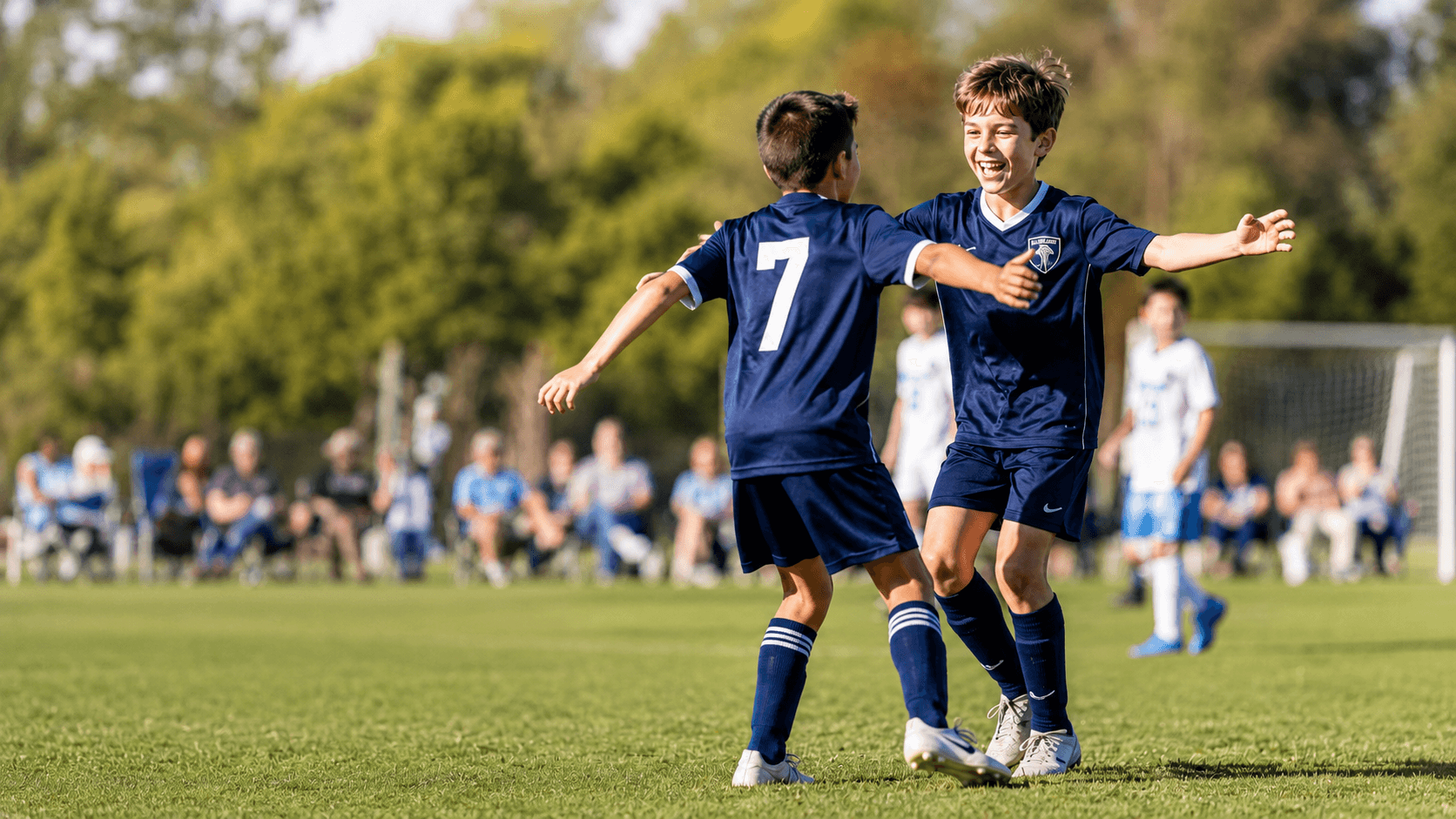
Your kid gets the ball, has space, and immediately pokes it sideways like the thing is on fire.
You know they can dribble. You have seen it in the backyard and at training. But on Saturday, one defender gets close and suddenly it is panic-pass o'clock.
That is not laziness. Most junior players hold back because mistakes feel massive: teammates groaning, selection, minutes, trials, or what the coach thinks.
So your job is not to yell “be confident”. That never works. Your job is to help confidence become something they can practise.
Confidence is built, not shouted
Confidence comes from evidence.
A kid who trusts their first touch is calmer. A kid who knows where their teammates are is calmer. A kid who has beaten a defender in training 100 times is more likely to try it in a match.
You are helping your child build enough little wins that the nerves do not run the whole show.
Give them a touch they trust
A player who does not trust their touch will always rush.
For MiniRoos players, especially U8 to U11, start with five minutes in the driveway: toe taps, inside-outside touches, sole rolls and little turns. Nothing fancy.
For U12 to U15 players, add more purpose. First touch out of their feet. Receive from a wall or rebounder. Dribble, stop, turn, pass. The aim is repetition.
Confidence is boring before it looks brave.
Teach the quick look
A lot of nervous players stare at the ball because the ball feels safer than the chaos around them.
But when they do not look up, everything becomes a surprise: the defender, the teammate in space, the pressure from behind.
Scanning just means checking what is around you before and while you receive the ball. For younger kids, call it “having a quick look”.
Try this at home: pass them the ball and, before they receive it, hold up fingers. They have to call the number before their first touch.
You are training the habit: look, decide, then play.
Brave does not mean reckless
There is a difference between playing smart and playing scared.
Playing smart is keeping the ball when nothing is on. Great. Playing scared is passing backwards every time because you are terrified of being the one who loses it.
Give your kid this rule: when you get the ball, ask, “Can I go forward?”
Can I pass forward? Can I dribble into space? If yes, have a go. If no, keep possession and move again.
That is not silly football. That is brave football with a brain.
Make mistakes normal before kick-off
If your child only hears about mistakes after they make one, mistakes become scary.
Say it before the game: “You will probably lose the ball today. That is fine. What matters is what you do next.”
That one sentence can take the sting out of it.
The best response after a mistake is not the perfect apology face, throwing arms in the air, or stopping to explain why the pass bobbled.
It is this: react, recover, reset.
React by trying to win it back or getting into position. Recover by helping the team. Reset by being ready for the next touch.
Then talk about it later, not in the car while they are sweaty, starving and emotionally cooked. Ask, “What did you see?”
Do not turn it into a courtroom.
Give them easy wins
When confidence is low, big goals are useless.
“Score today” is not always in their control. “Dominate midfield” sounds cool, but it is vague.
Try small match goals instead:
- Have three quick looks before receiving.
- Try one forward pass each half.
- Take one defender on when there is space.
- After a mistake, sprint back straight away.
- Talk to a teammate five times.
These are controllable. Once kids tick off a few small wins, they usually play with more freedom.
Watch your sideline language
This is the bit parents do not always love hearing: you might be making them more nervous.
Not because you are a bad parent. Junior football is emotional and it is easy to shout the exact wrong thing.
“Don't lose it!” sounds helpful. To a kid, it often translates as, “Losing it would be terrible.”
Try “love the idea”, “go again”, “brave choice”, “can you find space?” or “next one”.
You are not pretending mistakes are brilliant. You are showing your kid that one mistake does not change how you see them.
That matters more than you think.
MiniRoos, youth football and pressure
In MiniRoos, from U6 to U11, the whole point is touches, fun, learning and small-sided football. Kids need freedom to try things.
From U12 onwards, youth competition can feel more serious. Results, positions, grading, trials and development pathways can all add noise. In NSW, you may hear terms like SAP, Skill Acquisition Phase and Junior Development Leagues depending on the age group, club and association.
Do not let the labels swallow the kid.
Whether they are in local club football or a development pathway, the confidence equation is the same: more touches, better awareness, smart risks, quick recovery after mistakes, and adults who do not lose the plot.
Your next match-day job
Before the next game, skip the big motivational speech.
Give your child one brave, simple target: “Try one forward dribble when you have space.” That is enough.
Then when they try it, back them. Even if they lose it.
Because the kid who is allowed to make mistakes is the kid who eventually stops playing scared.